Zambian president Edgar Lungu says while it is good to have international investors, the west should not dictate the terms when they engage with Africa on trade.
This comes at a time where the World Trade Organisation is facing challenges after the US President Donald Trump lambasted the organisation.
Many believe it is time for international investors to look to Africa as an alternative market. In July 2019 African leaders adopted the implementation program for the African Continental Free Trade. However infrastructure will be key for the continent to integrate.
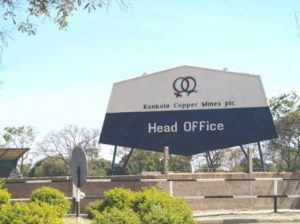
The ruling of the South African High Court over the Konkola Copper
Mines (KCM) liquidation process will not halt the process currently
going in the country, the Zambian government has said.
This is because foreign court judgments are not binding in Zambia,
especially in the absence of a reciprocal enforcement agreement
protocol.
The South African High Court this morning granted Vedanta Resources
an urgent interim interdict against Konkola Copper Mines (KCM) minority
shareholder, ZCCM Investment Holdings Plc.
However, the Zambian government has said the Gauteng High Court or
any court in South Africa has no power or jurisdiction over Zambian
courts.
Mines minister Richard Musukwa, who addressed the media at State
House in the company of justice minister Given Lubinda and Attorney
General Likando Kalaluka, said state lawyers had been advised to appeal
the matter.
He said the ruling by the South African court had no bearing at the moment because it was not registered in Zambia.
Musukwa further said Kalaluka would travel to South Africa to join the appeal to protect the integrity of Zambian courts.
And a legal expert explained that an attempt to enforce such judgment
requires that an application to register it in Zambia is commenced in
the High Court.
“It for this reason that in their statement to the Media, Vedanta has directed that the Judgment should not be circulated in Zambia as this will be tantamount to contempt of the on-going court process in Zambia,” the legal expert said.
African
economies are primed to be ranked among the fastest growing in the
world in 2019. According to the International Monetary Fund (IMF),
projections for the region’s economic growth next year has been bumped
up to 3.5% – 4% from earlier projections of 3% growth. If you set aside
Angola, Nigeria, and South Africa, the region’s projected growth rate
jumps to 5.7%.
Among those nations primed for growth is Zambia, which thanks to the steady rebound of commodity prices, an improvement in the global economy and improved capital market access, enjoyed 5% growth in the third quarter of 2018, up a half-point from a year earlier. Still, as many analysts express concern over the country’s management of debt, a fiscal consolidation programme has boosted confidence, resulting in improving medium and long-term forecasts for the country’s potential growth with President Edgar Lungu at the helm.
But Zambia is not quite out of the woods yet. Debt remains high,
there’s an ongoing tax row with the mining industry, and the political
opposition complains of rough treatment. So the question is, can
Zambia’s reputation for resilience and stability continue to hold
through this difficult period?
I recently had an opportunity of interacting with Christopher Mvunga,
Zambia’s Deputy Secretary to Cabinet, to get his views on how the
economy is performing and see what challenges may lay ahead for the
Southern African nation.

 Zambia Today